ICNEWS 2027
3rd International Conference on Networking, Embedded and Wireless Systems
Distinguished Speakers
Knowledge Partners

SM Electronic Technologies

Optimus Logic Systems
IEEE Sensors Council
In technical association with IEEE Bangalore Section & IEEE Sensors Council
B.M.S. College of Engineering
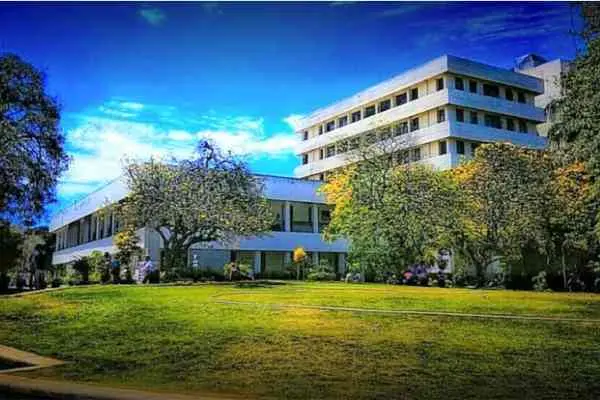
The B.M.S. College of Engineering (BMSCE) was founded by a great visionary and philanthropist Late Sri. B. M. Sreenivasaiah (BMS) in the year 1946. After demise of the founder, Sri. B. S. Narayan the illustrious son of the Founder took over the reins of the College. Under his able leadership, the college grew from strength to strength. BMSCE is the first engineering college established in the country (pre independent India) by a private enterprise. The college is an aided institution (by Government of Karnataka) and affiliated to Visvesvaraya Technological University (VTU). BMSCE offers 13 UG, 12 PG & 15 Research programmes. BMSCE is proud to be the First and only Engineering Institute in Karnataka accredited with the Highest Grade in three consecutive cycles of NAAC accreditation.
The College became an autonomous institution under VTU in the year 2008-09. In the year 2011, BMSCE was recognized as a QIP Centre in Engineering & Technology by All India Council for Technical Education (AICTE). BMSCE is the only partner institution from India along with the other universities located in Chile, China, Germany and USA for the Melton Foundation, USA. . The college has a strong alumni base.
Department of Electronics & Communication Engineering
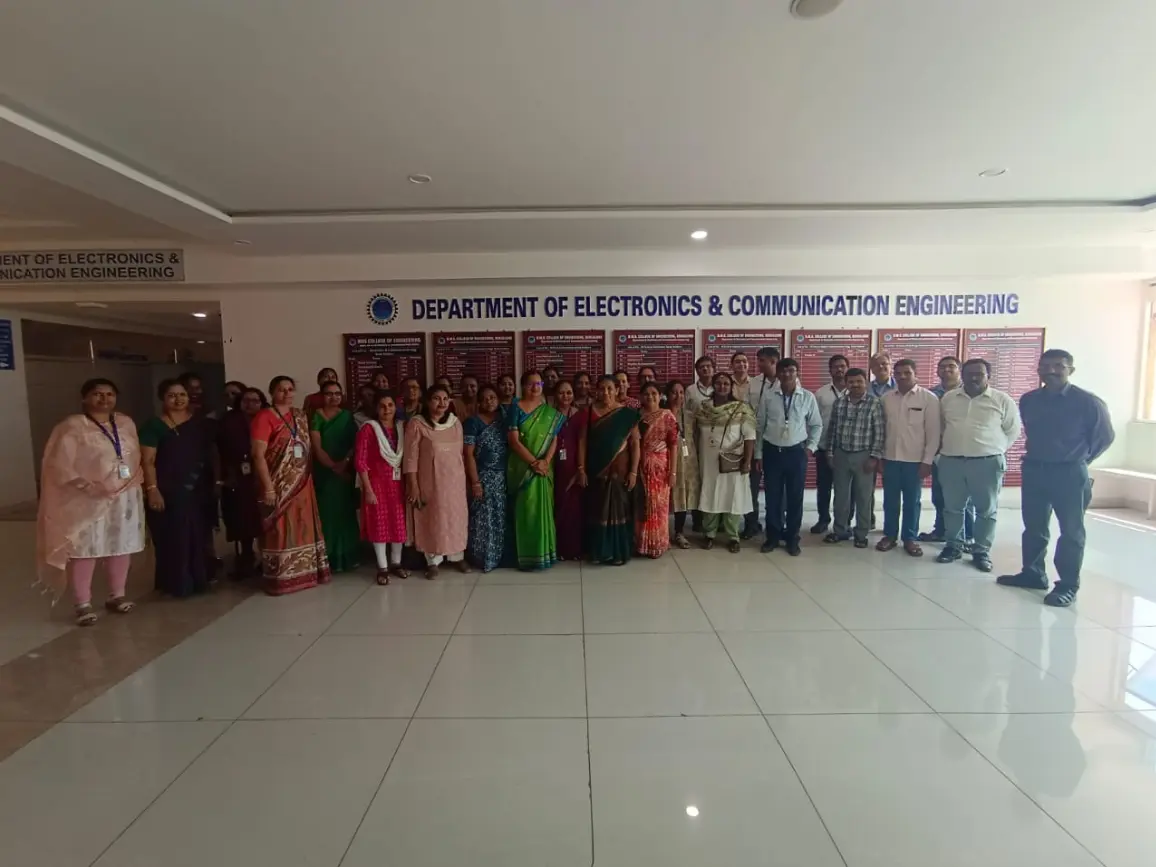
The Department of Electronics and Communication Engineering (ECE) of BMSCE was established in 1971 with an initial intake of 60 students to the Under Graduate (UG) program and is enhanced to an intake of 420 students currently. The department offers three PG programs: Electronics (since 1986), Digital Communication Engineering (since 1996) and VLSI Design & Embedded Systems (since 2014). The department is also a recognized Research Centre (RC) by VTU from 2002 and is a recognized Quality Improvement Program (QIP) center by the AICTE from 2011. Department is accredited by NBA (Washington accord) for 3 years under TIER-1 (cycle -2) from 2023-2026.
About ICNEWS 2027
ICNEWS 2027 invites original research and prototypes focused on “Driving Sustainable Innovation.” Key themes include Next-Gen Wireless (6G/V2X), Edge AI, and Intelligent Embedded Systems, with a strong emphasis on Sustainable Industrial Automation, Smart Healthcare, and Advanced VLSI/Quantum Technologies.
Important Dates
Keep track of the essential deadlines. All times are in IST (UTC+5:30).
* Deadlines are strict and may only be extended via official website announcements.
Call for Papers
ICNEWS 2027 welcomes original, unpublished research contributions across six thematic tracks covering Networking, Embedded and Wireless Systems.
Focus Areas
We particularly encourage submissions addressing sustainability, energy efficiency, and real-world deployments through theoretical contributions and experimental prototypes.
Guidelines
- IEEE double-column format
- 3–4 pages (inclusive of figures and references)
- Double-blind peer review process
Track 1Communications & RF Engineering
- ›Next-Gen Wireless: 6G/V2X models, RF/Microwave engineering, and Optical networking
- ›Network Intelligence: Modeling, Simulation, and Quantum-safe communication
- ›Security: Blockchain-enabled networks and CyberPhysical Systems (CPS) security
Track 2Intelligent Systems & Edge Computing
- ›AI & Embedded: Edge AI, Intelligent Embedded Systems, and IoT architectures
- ›Quantum & Computing: Quantum technologies and Energy-efficient (Green) computing
- ›Signal Processing: Advanced DSP, Image processing, and Media Analytics
Track 3Smart Healthcare & Biomedical Systems
- ›Bio-Instrumentation: Smart healthcare devices and Biomedical signal interpretation
- ›Wearable Tech: Flexible electronics and HumanMachine Interfaces (HMI)
Track 4VLSI, Automation & Industrial Tech
- ›Microelectronics: VLSI Design, Low-power circuits, and Emerging materials
- ›Industry 5.0: Sustainable Industrial Automation and Advanced Measurement/Control systems
- ›Semiconductors: Wide-bandgap devices and Nanoelectronics for sustainability
Track 5Energy, Smart Cities & Sustainability
- ›Power Electronics: Smart Grids, Renewable Energy, and Electric Vehicle (EV) systems
- ›Urban Innovation: IoT for Smart Cities and Environmental monitoring
- ›Green Lifecycle: E-waste management, Circular Economy, and Clean Energy technologies
Track 6Experimental Track
- ›Demonstration of testbeds, prototypes, and real-world sustainable deployments
Submission Guidelines
Adhere precisely to IEEE formatting requirements to ensure your manuscript moves smoothly through the review process.
Paper Format
- IEEE double-column conference format
- 3–4 pages maximum (including figures)
- PDF format only
Review Process
- Strict double-blind peer review
- Min. 3 independent domain experts
- Evaluated on originality and clarity
Submission Portal
All manuscripts must be submitted electronically via the official ICNEWS 2027 conference website.
Open Submission PortalImportant Policies
Plagiarism checks are mandatory. Concurrently submitted work to other venues is strictly prohibited. Final camera-ready submissions require copyright transfer.
Registration Packages
Choose your participation mode. At least one author per paper must register to present.
Fee Structure
| Participant Category | Non-IEEE Member | IEEE Member |
|---|---|---|
| Student - UG/PG/Research Scholars | ₹5,500 | ₹3,900 |
| Faculty/Industry Persons | ₹6,500 | ₹4,550 |
- Certificates will be issued only to registered participants.
Deadlines
The Microsoft CMT service was used for managing the peer-reviewing process for this conference. This service was provided for free by Microsoft and they bore all expenses, including costs for Azure cloud services as well as for software development and support.
Organizing Committees
Advisory Board
Our esteemed advisory board comprises experts and pioneers driving innovation globally.
Conference Venue
Location
B.M.S. College of Engineering
Bull Temple Road, Basavanagudi, Bengaluru – 560019, Karnataka, India
Commuting Guide
- International AirportKempegowda International (~45 min)
- Metro AccessSouth End Circle Metro Station
- By RoadBull Temple Road, easy cab access
Get in Touch
For queries directly regarding paper submission, review loops, or general conference coordination, please contact the organizing committee.
ICNEWS 2027
Department of Electronics & Communication Engineering
B.M.S. College of Engineering
Bengaluru, India